 alphapharmcanada.isSCIENCE / STRENGTH / PERFORMANCE

WOLVERINE BLEND.
20 MG.
BPC-157 + TB-500 in one blend. Two names you've seen in recovery research, one formulation to understand. Here is what the science actually says.
EXPLORE THE FORMULA ↗What Is Wolverine Blend 20 mg?
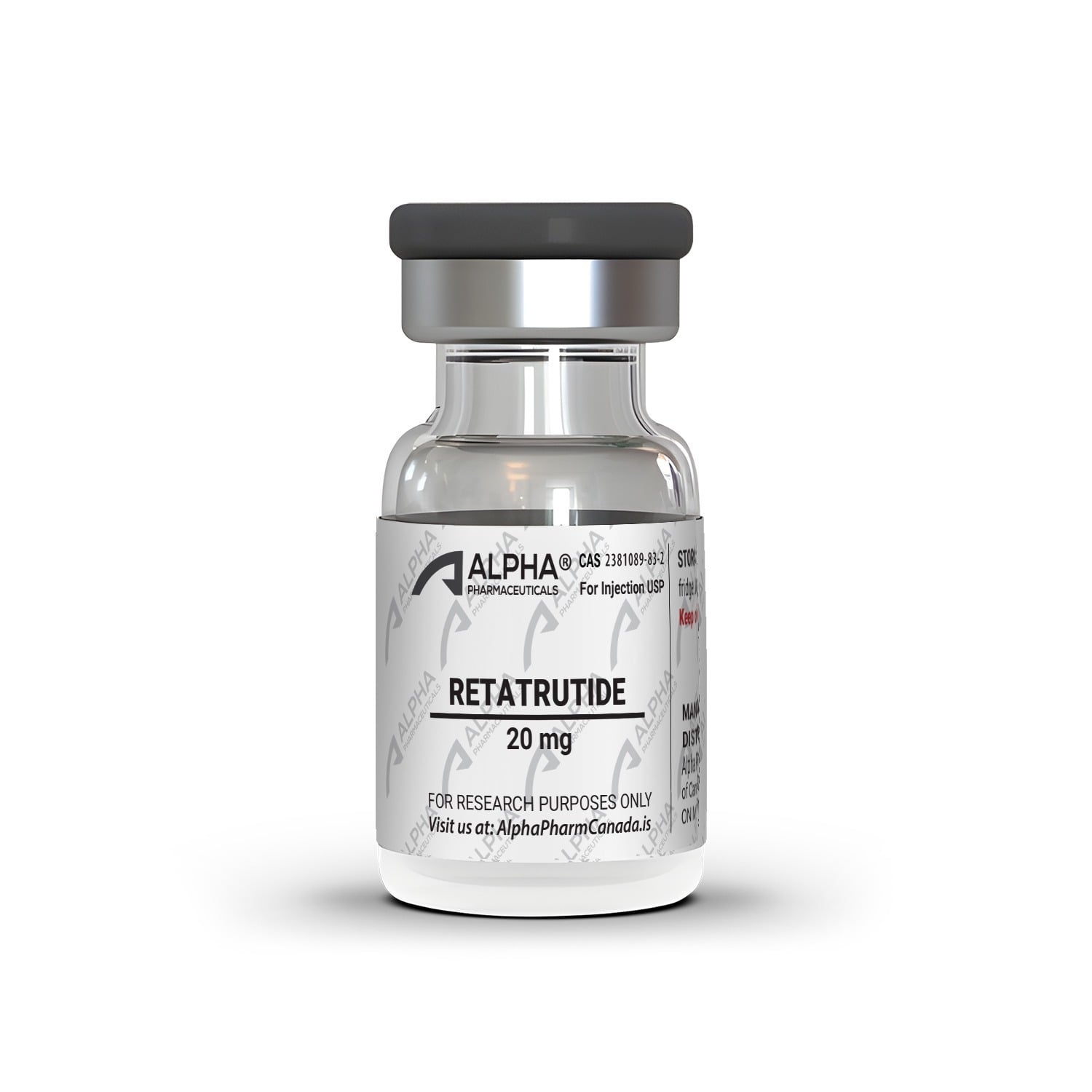
Wolverine Blend is a combined formulation marketed with two investigational peptides: BPC-157 and TB-500. The product name identifies a 20 mg total blend, rather than two separately listed peptide products.
Wolverine Blend 20 mg is a BPC-157 and TB-500 peptide combination. These compounds are being studied for biological pathways associated with tissue responses, but human evidence does not establish the blend as a safe or effective treatment for injuries or faster recovery.
One labelled blend
20 mg refers to the combined label amount. Verify the individual ingredient amounts on the actual product listing or vial.
Investigational peptide
Studied primarily in laboratory and animal models for pathways related to tissue responses.
Investigational peptide
Marketed as a thymosin-beta-4-related peptide; the precise TB-500 molecule should not be conflated with all research on full-length thymosin beta-4.
The practical packaging difference is straightforward: a premixed blend combines both labelled compounds in one product. That does not, by itself, establish fewer injections, a safer formulation, improved absorption, or better recovery outcomes.
Meet BPC-157: Why Researchers Are Interested
BPC-157 is a synthetic peptide consisting of 15 amino acids. It appears frequently in preclinical studies involving tissue injury, blood-vessel signalling, inflammation-associated processes, and gastrointestinal models.
Cells and tissue responses
Experimental studies have explored cell migration, inflammatory signalling, and other mechanisms relevant to tissue responses. These findings are preliminary and do not demonstrate that BPC-157 heals human tendons or ligaments.
Limited clinical evidence
Published human evidence is sparse, with no established high-quality clinical proof of effectiveness or a validated long-term safety profile for athletic recovery.
Think of the preclinical evidence as a research hypothesis, not a proven performance or rehabilitation strategy. See the recent orthopaedic evidence review.
Meet TB-500: Not the Same as Every Thymosin Beta-4 Study
TB-500 is commonly described in the peptide market as a synthetic fragment related to thymosin beta-4, a naturally occurring protein involved in cellular functions. Some discussions of TB-500 cite research performed on full-length thymosin beta-4, even though the substances are not interchangeable.
Evidence about full-length thymosin beta-4 cannot automatically be treated as human evidence for a marketed TB-500 peptide. The exact molecular identity and study design matter.
Researchers have investigated thymosin-related signalling, including cell movement and tissue biology. However, there is insufficient direct clinical evidence to claim that TB-500 reliably accelerates recovery from exercise or sports injuries in humans.
Why Put BPC-157 and TB-500 Together?
Wolverine Blend brings the two named peptides together in one formulation. For anyone comparing catalogue listings, the key distinction is combined versus separate product packaging, not a clinically demonstrated advantage.
| Question | Combined 20 mg blend | Separate products |
|---|---|---|
| How many product formulations? | One containing both labelled peptides | Two individually listed products |
| Can you change each component independently? | Not independently within a fixed-ratio blend | Individual products are separate |
| Does this prove fewer injections? | No | No |
| Is one approach clinically proven better? | No comparative human evidence established | No comparative human evidence established |
The available research does not establish a validated dosing protocol for the combination, so this article does not provide self-injection instructions or claim that blending reduces administration frequency.
What Does the Research Actually Show?
There is a real difference between interesting molecular research, animal experiments, and clinical trials that show benefits and safety in people.
Laboratory mechanisms
Studies explore signalling pathways and tissue-related responses. Useful for research questions, not proof of clinical outcomes.
Early biological signals
Some experiments report tissue-related changes in animals. Effects cannot be assumed to translate to people.
Evidence still lacking
Robust controlled human trials validating the combined blend for injury recovery have not been established.

Recent medical reviews emphasize the shortage of reliable human evidence and the uncertainty surrounding product safety, composition, and regulatory status. Read the sports-medicine review.
Safety, Quality and Canadian Regulatory Status
BPC-157 and TB-500 are not Health Canada-authorized medications for treating injuries or boosting recovery. Human safety data, long-term effects, and effective clinical dosing remain inadequately characterized.
For strength athletes, there is an additional issue: peptide use can violate anti-doping rules. Competitive athletes should check current World Anti-Doping Agency rules and consult qualified medical and sport professionals.
If you have an injury, persistent pain, or a suspected tendon or ligament problem, seek professional diagnosis. Appropriate training modifications, physiotherapy, and evidence-based rehabilitation matter much more than a viral nickname.
Explore Wolverine Blend and the Peptide Collection
Want to compare product composition and browse the wider peptide selection? Start with the official alphapharmcanada.is catalogue pages. Product listings are not evidence of Health Canada authorization.
Wolverine Blend 20 mg
Product information for the combined BPC-157 and TB-500 formulation, including any label-specific ingredient breakdown.
VIEW WOLVERINE BLEND DETAILS ↗Peptides & HGH Collection
Browse the wider alphapharmcanada.is peptide catalogue and compare the descriptions of other peptide blends.
EXPLORE THE COLLECTION ↗These links are provided for catalogue information. This educational article does not recommend self-administration or use of unauthorized medicines.
Wolverine Blend: Frequently Asked Questions
What is Wolverine Blend 20 mg?
It is a combined formulation labelled as containing BPC-157 and TB-500, with a total of 20 mg. Check the actual product label for the amount of each component.
Is Wolverine Blend the same as buying BPC-157 and TB-500 separately?
Both catalogue approaches involve the same two named ingredients, but a fixed combination and two separate products are not automatically equivalent. Exact molecular identity, quantities, formulation, and quality specifications matter.
Does Wolverine Blend require fewer injections?
A single combined vial does not establish a reduced injection frequency. There is no validated human dosing or administration protocol for this blend.
Does the Wolverine peptide blend heal injuries faster?
No reliable controlled human clinical evidence establishes that the BPC-157 and TB-500 combination accelerates recovery from human injuries. Experimental findings should not be presented as proven treatment results.
Where can readers find the Wolverine Blend listing?
See the Wolverine Blend product information page or browse the peptide collection on alphapharmcanada.is.
Research References
- Investigational Peptides in Orthopaedic Practice: Evidence, Safety, and Patient Counseling for BPC-157, Thymosin Beta-4, and TB-500 — orthopaedic review (2026).
- Peptide Supplements and Their Therapeutic Applications in Sports Medicine — review of clinical evidence and research limitations (2026).
- Health Canada warning about unauthorized injectable peptides — government safety notice (2026).
Editorial information, not individualized medical advice. Content reflects publicly available evidence as of November 2026. No clinical reviewer is claimed.